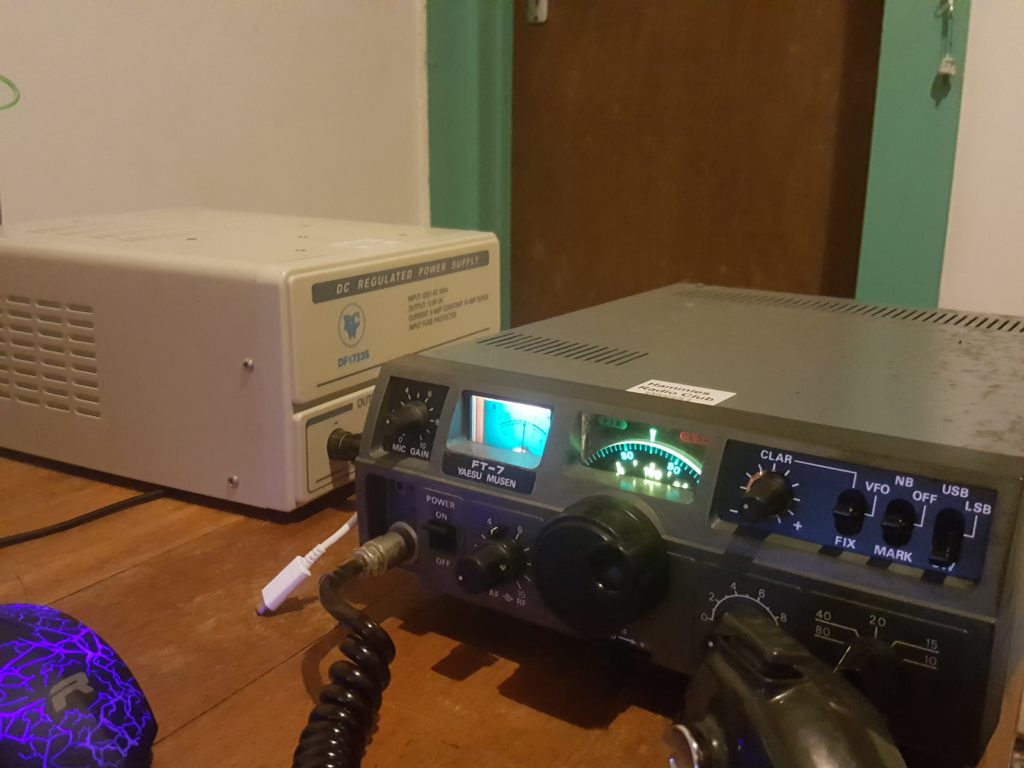
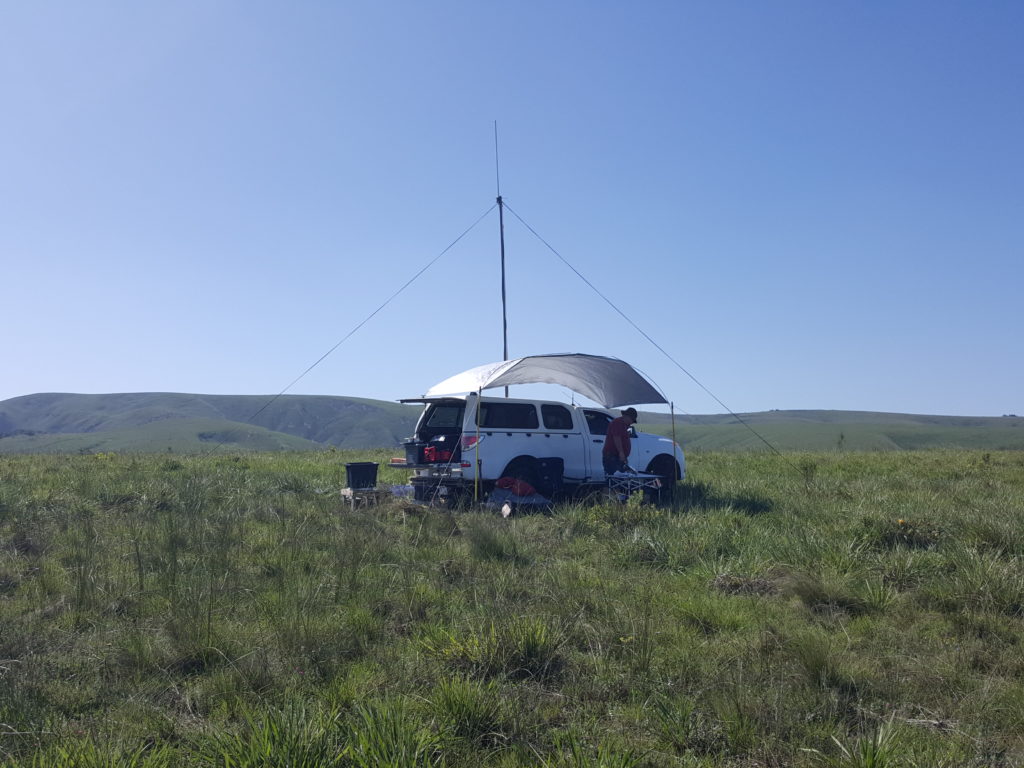
My HF antenna came down today – something I have been meaning to do for some time and have really just not had the heart to admit it. I’m QRT.
There was a HAMNET call in today and ONE of the callins noticed I was not there and gave me a call – other than that my Ham friends have been rather thin on the ground!
I am still a committee member on the PEARS committee, and as such I need to read the news in a week or twos time, so I still have my VHF rig up – but I have not been on the air in months and apparently not being missed either 😉
I’m not sure what is next, but I need to move on. Ham radio is not what it used to be and SOTA has changed too.
I feel trapped in that I have commitments (like the SARL website and the PEARS news bulletins) but really feel like I’m not doing them justice. That said, will any one else do anything if I make a gap?
Well, plenty, but one of my pet peeve has to be people who are too busy to help.
I am involved in both Amateur Radio and Scouting and over the past few weeks have had similar experiences with both. People too busy to help.
In one case, I have a trainer who is retired and currently recovering from a shoulder operation, so not even doing his normal hiking – which he does do most weekends when not at home recovering.
We need a program drawn up and approved by national (and he needs to submit the program to national). We are in a time crunch – the course is literally less than a month away! He is too busy to draw up a program, but me a working professional, active in my family and hobbies, I must find the time.
In Amateur radio I have a similar issue. I head up a number of committees or rather working groups. Any guess how often I get to “be too busy to attend a meeting” but others seem to always have an excuse. I suppose it is a bit like never expecting your doctor to be sick.
If we are here to help others, what are they here for?
I was playing with lumen5.com today – they make videos from your blog posts and other interesting stuff. It needed a URL to import for a demo, so I gave it the URL for this site and guess what – I see I have not posted on the site in over 2 years!
When everything in your hobby becomes “been there, done that” it might be time for a new hobby. Or at very least a change of direction.
In the two years, I have continued to do ham radio, but more and more for others and less and less for me. I have attended most of the usual events, but they blur with similarity to a point where I can’t really remember them apart.
When I started out in the hobby, it was SOTA. In fact, I got a radio license in order to do SOTA – to activate! I forced my way up Lady’s Slipper on the 1 May this year for a SOTA activation – 1 point! And the last time I activated was the SOTA activity day LAST YEAR – almost a year to the day since my last SOTA.
I am chasing now, when I can. Not quite what I signed up for.
I have done a lot in this hobby – and not just events and SOTA. I have given Hammies courses and that has been very rewarding. I have worked DX – although never paying for the certificates, I have Mixed, Digital, 15, and 20m “DXCCs” with 40m and 10m both in the 90s (40m has been on 99 now for about 6 months!). 17m is next with phone also getting close now. I have worked all continents, worked all Africa, worked all zones, and even WAZS 500. I need three more states for WAS. All this from a modest station with 100W, a piece of wire in the form of a home-made non-rotatable center-fed fan dipole.
I seem to be in the part of the hobby where I do more “admin” or “management” than actual radio. I often can’t take part in a contest because I’m the scorer.
I used to be involved in HAMNET here in the Eastern Cape, but that too seems to have dried up into nothing. I can’t remember the last time we did anything! A few years ago I (single handedly) ran a national black out exercise. Nothing much has happened since then. I am the scorer for the HAMNET 40m Simulated Emergency Contest and last time around there was not even 1 ZS2 entry! Even the PEARS contest seems to be void of local support.
Is it time to go QRT? Perhaps, a change in direction could help? One last thing on my “radio bucket list” is a DXPedition. After that all bets are off!
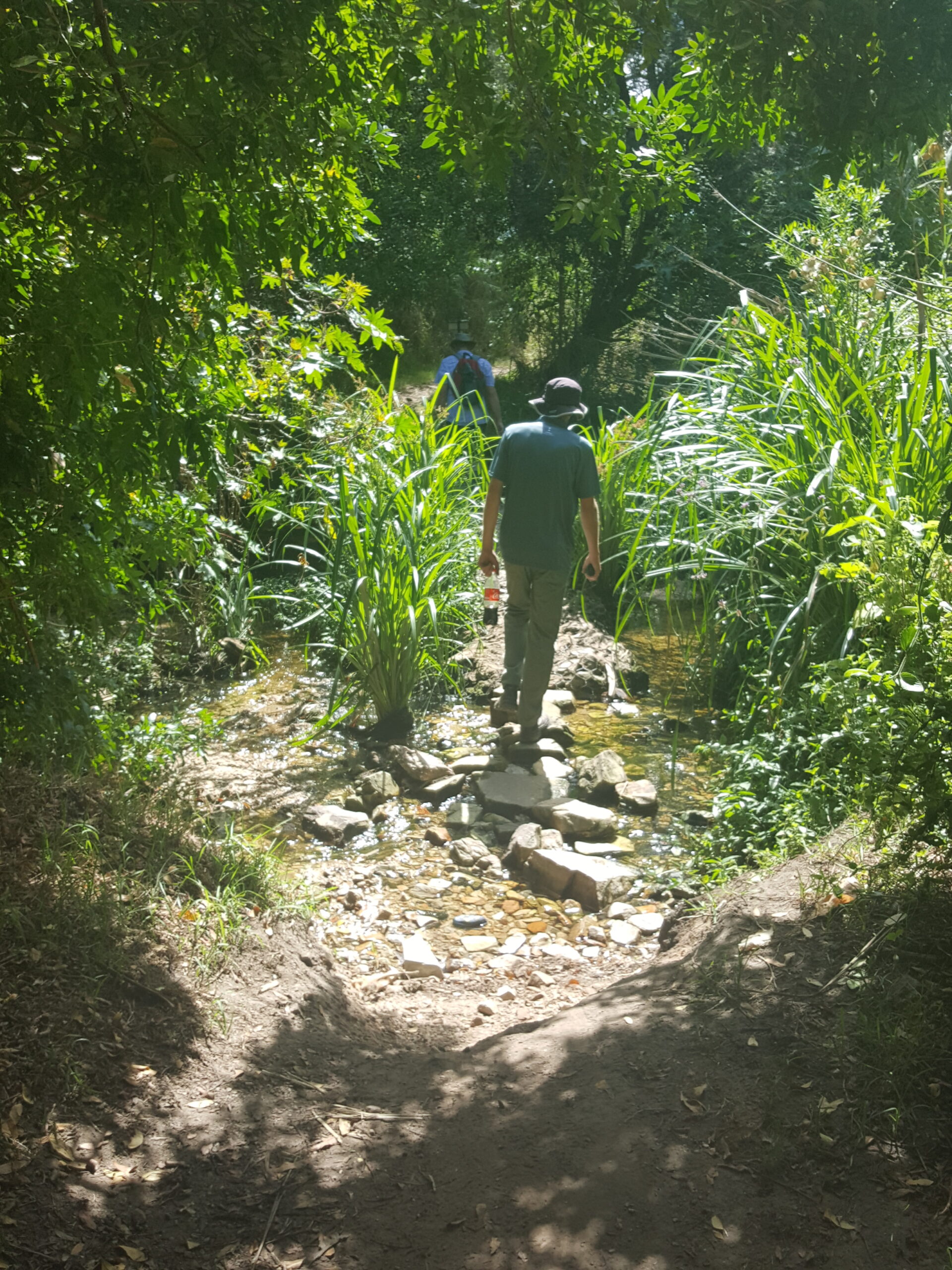
The Baakens River runs through the heart of Port Elizabeth. Well I like to think so – it runs through my part of Port Elizabeth.
Our entry point – beacon VKE-19A
The Guineafowl Trail as the “Baakens River Parkway” is better know is a series of paths (and yes, mountain bike routes) through the valley once famous for flooding and having the odd caravan bobbing down the river!
HAMNET Eastern Cape, under the watchful eye of Andrew Gray ZS2G decided to put up a temporary JOC and send a walking party through the deepest part of the parkway to establish UHF communications and VHF fall back positions for communications from inside the river valley.
The 1st Walmer Scout Group has the container (now affectionately know as the Jam Tin) which provides a very good base for operations, but we needed to be infrastructure independent as so the GV special was deployed.
ZR2BK with ZU2NX, ZS2GV, and ZS2G in the front.
The GV special is a field-deploy-able mobile repeater with a number of features that make it a great option for this sort of activity. It has a UHF repeater (complete with 7.6MHz split – not a cross band!) with a VHF leg as well. Operating on 438.650 (as the repeater’s TX frequency) and as a short range simplex frequency meant we could get communications through to the JOC in a number of ways. The VHF leg added another band to the mix and proved the bands are not equal. There were places VHF trumped UHF and there ere places VHF was just not worth having 🙂
We met at the Walmer Scout Hall at 1:30pm SAST and after a brief note from the boss, we set off to do a variety of signal checks before returning to the hall to enjoy a braai and some eyeball QSOs.
Some of the people were mobile and covered a large area of Port Elizabeth from the beachfront inland near Newton Park. Patsy ZS2PTY, Werner ZS2WS, Gert ZS2GS, Andre ZS2ZA, and Mike ZS2MIC were mobile driving around town and calling in to the repeater at JOC.
JOC was manned by Tony ZR2TX, Mandy (the birthday girl!) ZS2AV, and Shaun ZS2SG. JOC was located at the south end of Mill Park Road – KF26TA07UU.
The walking team who made their way through the valley on foot were Andrew ZS2G, Keverne ZR2BK, Glen ZS2GV, Nicole ZU2NX, and yours truly ZS2DH.
After setting up the JOC the walking team were dropped off behind the Linkside School where we entered the valley. The gate behind the school is located at KF26SA98FK.
A short walk from the gate brings you to the entry point for our exercise – the VKE-19A beacon located just west of Dodds Farm.
Various checkpoints were logged with communications to the JOC from 14:47 at KF26SA98FK through KF26SA97IW (the beacon at our entry point) down to the first water crossing at KF26SA97GT.
We then walked up river from pool to pool doing communications checks as needed. KF26SA87QT and KF26SA88KH (could be a campsite here). We then started to climb out the valley towards the north. KF26SA88DL is a good outlook point with a view over the valley towards the third avenue dip exit.
We exited the valley at Dorothy Road (KF26SA79OB).
JOC coordinated a lift for the walking group who were then taken back to JOC. JOC went QRT and we all made our way back to the Scout Hall where ZS2JIM had the fires going. A few interested parties had arrived to join in the festivities.
Our exit point in Dorothy Road.
Among the interested guests was Bevan ZS2RL, Damien ZS2DLF and his family and Wendy (XYL of ZS2SG) joined us.
ZS2G sponsored a lucky draw of a mobile antenna which went to Shaun ZS2SG – well done Shaun!
The exercise was to identify communication problems in the area and that task was completed, logs made and a lot was learned. That said, it was hardly work – we all had fun and the braai made it awesome.
International Space Station Orbiting Earth. 3D Illustration.
The International Space Station (ISS) is a marvel in its own right. It has radio transponders onboard that allow it to operate as a crossband repeater. A crossband repeater about 400Km away which travels at about 7.66 Km/s – So not a typical repeater.
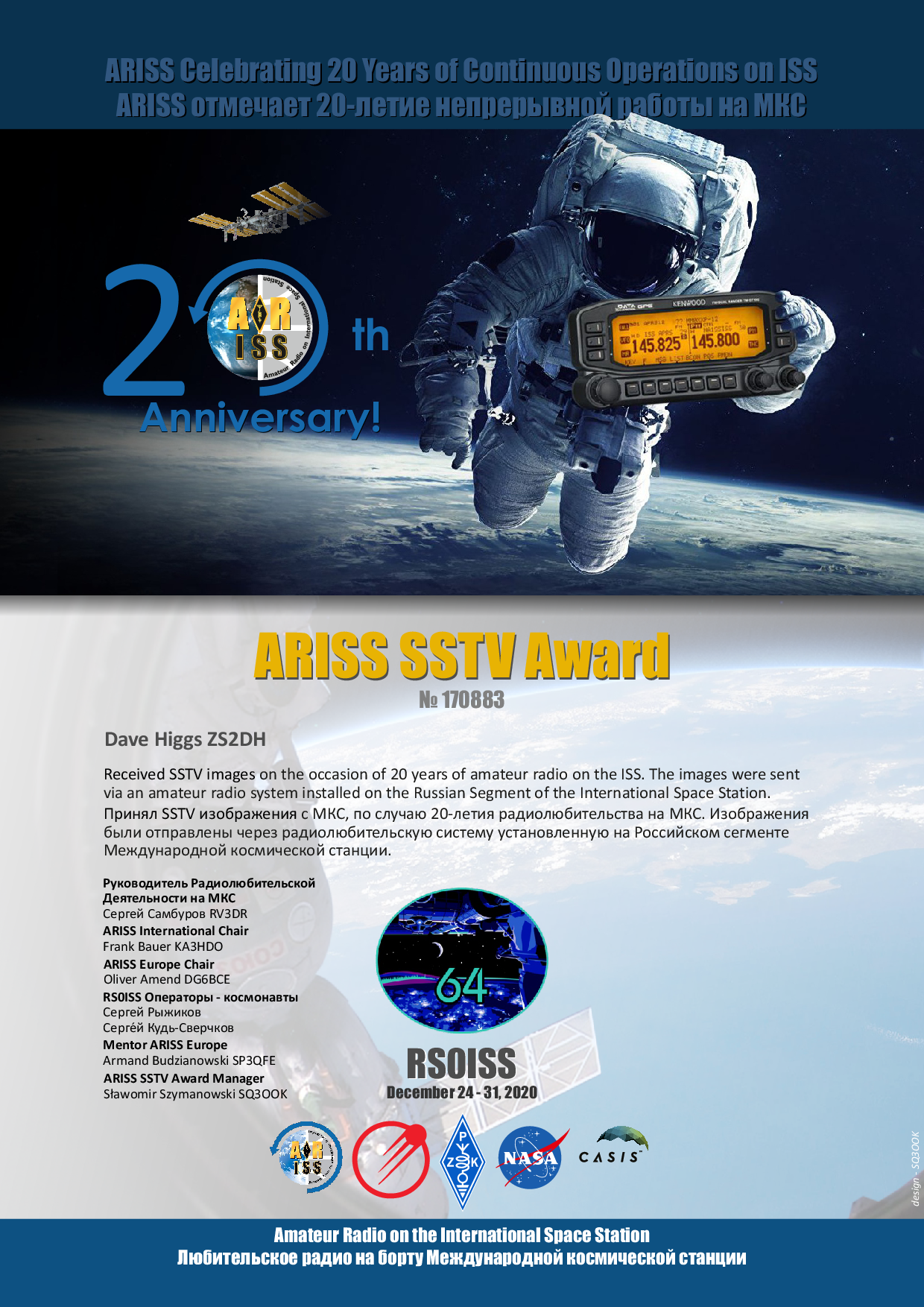
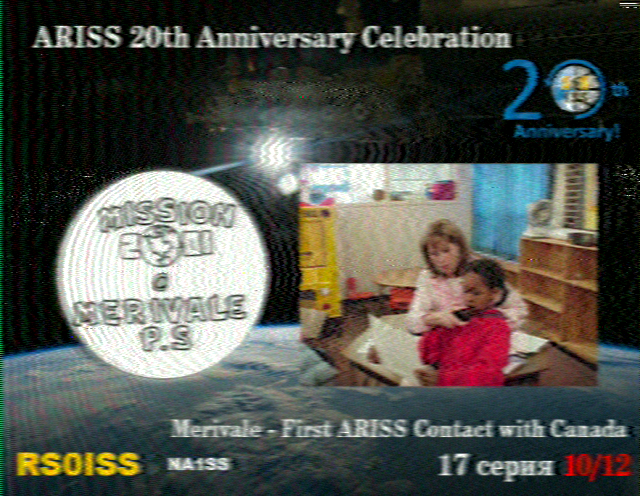
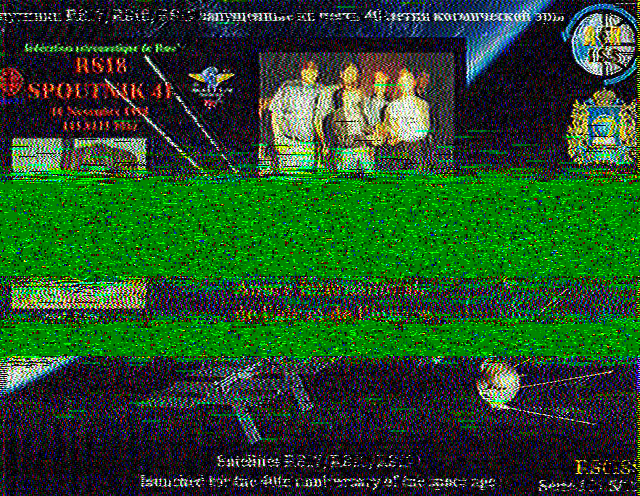
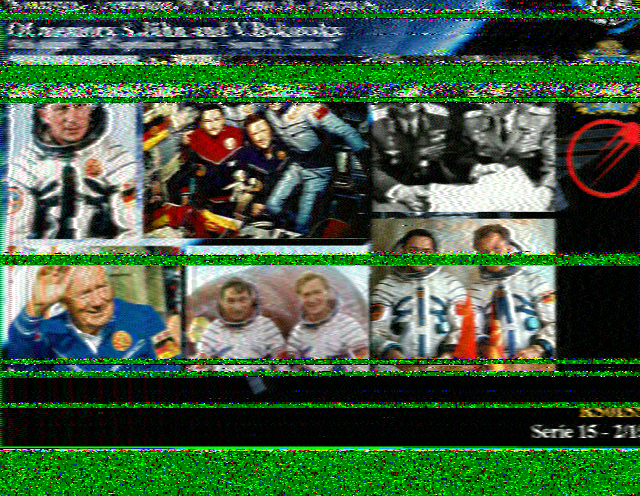
Between 24th and 31 December 2020 the ISS transmitted images for radio amateurs to download and collect. A set of 12 images in celebration of the 20th Anniversary of the ARISS program.
ARISS is the Amateur Radio on the ISS program and promotes amateur radio by allowing schools and clubs to arrange contacts with operators onboard the ISS.
Technical info: Images were transmitted on 145.8 MHz FM using the SSTV Mode PD120.
Getting some wallpaper for your efforts. Decoding the images is easy – if you don’t know how to decode the images, read my other post about decoding SSTV images and also read the post on working satellites.
Once you have the images you could upload them to the online gallery at https://www.spaceflightsoftware.com/ARISS_SSTV/. If nothing else you get to see the gallery with images uploaded from other hams around the globe – and have yours up there for others to see. However, you could apply for a “QSL-card” certificate by requesting one from https://ariss.pzk.org.pl/sstv.
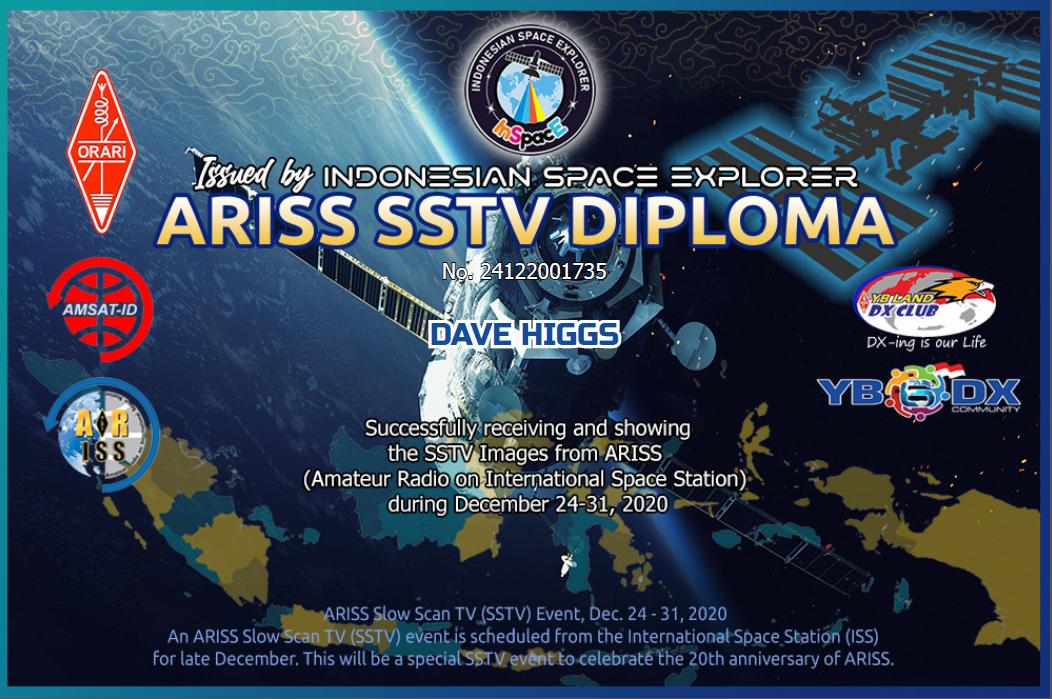
InSpace offer a “diploma” which you can get by emailing 2 images that are at least 50% decoded to inspacexplorer@gmail.com.
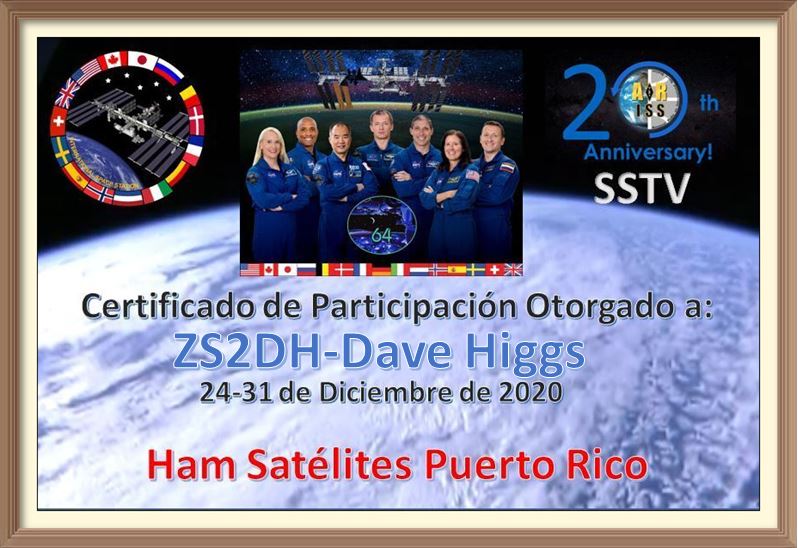
You can also get a certificate of participation by emailing any one of your images to kp4rv@yahoo.com.
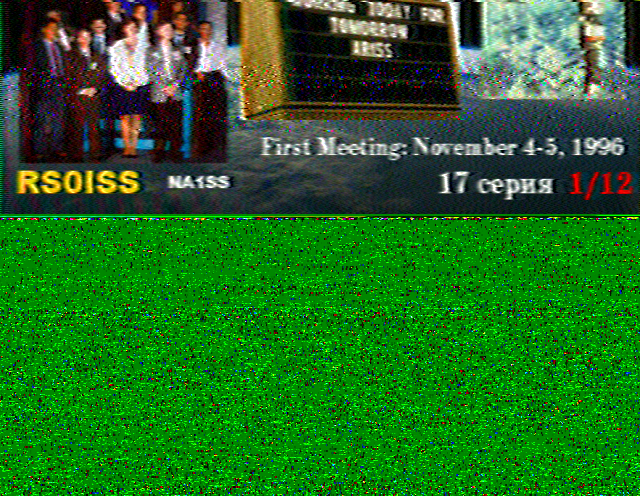
Here are some of the images I managed to decode – not a lot because I took a long walk.
The ARISS SSTV DiplomaA certificate of participation
SSTV is really easy to decode – given the correct tools. SSTV is a gobble-de-gook digital mode that comes over FM and contains image data that can be decoded using some free software. I decode the ISS images with a simple baofeng handheld connected to my station vertical antenna and then run Robot36 software on my smartphone to decode the gobble-de-gook audio stream.
It really is that easy! I use the handheld because it can be placed conveniently for access to the cellphone and is easier to use than the station VHF radio – which is a channel radio without the frequency used by the ISS for SSTV being one of the channels. I could add it – and I probably will before the next set of images is sent from the ISS – but then I did say I’d do that the last time too!
Software for decoding SSTV is readily available but I use Robot36 – available for free on the Google Play Store. It is a great little piece of software, is super easy to use and can even auto-detect the mode being used if you not sure. There is other software available too, but I have found Robot36 to suit my needs perfectly.
Software for tracking satellites is also available and there are a number of options available too. I use gPredict, but there are also other such as Orbitron, SatPC32 and others. Google – there are many options.
A few other insights: Typically images take about 2 minutes to transmit, followed by a 2 minute gap between images. What this means is that you will usually get more than one image per pass – but not necessarily. Something to bear in mind is that the satellite will start and stop transmitting when it is ready – not when it is over your QTH. When the satellite comes over the horizon (AOS) it might be halfway through sending an image. In the same way it could still be transmitting an image when it goes below the horizon (LOS). The length of the pass is also very important as low passes (close to the horizon) will be significantly shorter than when the satellite moves directly over your QTH.
There is no guarantee as to what you will get, so you simply have to take what you can get.
Suck it up princess!
What about the Doppler shift? When you are working a satellite, the frequency on approach, at your location, and leaving you location appear to be at different frequencies. When it comes to SSTV, I don’t use the yagi, I simply rely on my vertical and I just forget about the Doppler shift. Naturally, low passes are better for getting into the vertical antenna – and this helps to negate the impact of the Doppler shift.
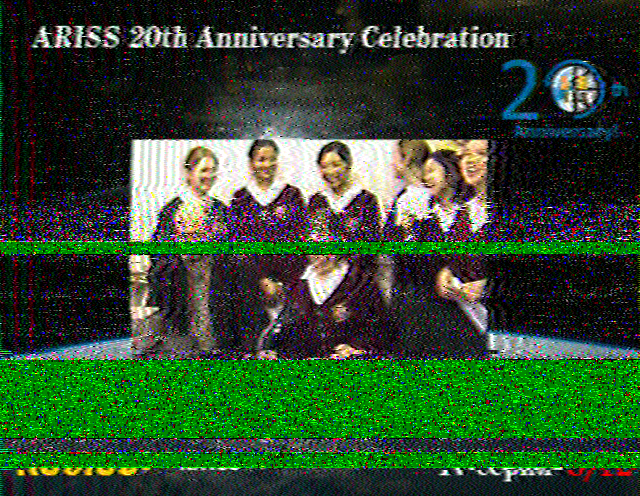
What does QRM look like? When you decode images and get a loss of signal or interference, it is shown in the image as green. The decoding process is much like that of downloading from the internet – in that the image comes in lines and if there is a problem halfway through it is just tough. Below are a few images to demonstrate this.
A new and exciting event – the HAMNET Blackout 2020 – a national training exercise for HAMNET will take place on the weekend of 29 and 30 August 2020.
This year it is being organised by the HAMNET teams in ZS3 and ZS4 call zones. For more information, go to the blackout page or contact Rickus directly.
While a lot will be the same as the last exercise, an exciting new addition is the focus on digital modes. JS8Call and WinLink will be used as primary operating modes, although the “Message must get through” remains and any way will do.
Operating off grid for the 24 hour period from noon on Saturday to noon on Sunday is more of a challenge than it sounds. While you can charge your batteries before the start, only off-grid power is allowed for everything. The challenge here is power through the night – including lighting, cooking, heating, and so on. After running the whole afternoon – charging your batteries by solar while you can – you go into the long night hall. Remember it is winter here, so the sun sets early and rises later so it is quite some time before your solar panels get charge into those tired batteries.
A generator does make it easier, yes. But the purists will never stoop to that level – not in training! OK, maybe it is only me. I still think that generators will be a short lived solution in the event of a serious power outage. Remember only while there is power can the petrol station pumps work – after that we are down to you own private store, what is in your vehicles and lawnmowers!
Lets talk a little about the digital modes – JS8Call and WinLink and why they have been chosen as the primary tools.
I know some people (ZS4BS?) who will joke about the digital modes – FT8 getting more than it’s fair share of abuse (HI) who will tell you digital modes are for kids. Digital modes get through where phone will not. This is a fact. FT8 gets further than CW in a lot of cases and is “understood” by more hams today than CW. Also a fact. Given the current sunspot cycle, interference, and the fact that we running low power all point to digital being the right choice.
WinLink lets you send emails – either through the WinLink system (online to other email addresses) or peer-to-peer, which is what we are going to do. This will allow us to send lists etc. to other stations and you can imagine how that would be an advantage when there is no internet available. Photos can also be sent, but depending on the conditions you would not want to send big files, and photos might be a grey line – and care taken when sending files of any size really.
JS8Call, based on FT8, allows for keyboard-to-keyboard communications. This is great for two reasons – one you can send the message to anyone who can hear it (just like phone), but you can also send it to people who are asleep. Well, lets clear that up a bit, the message can be received and stored and viewed later by the operator. A phone contact would not be made, but you can still get the message if you were asleep, taking a leak, or repositioning the solar panels!
To try and do justice to these two modes in a single blog post is simply not possible. They are both great modes and worth playing around and becoming familiar with them as they are great tools to have in your disaster box.
We are getting a Raspberry Pi with the relevant software loaded. A RPi can operate on very low power and is powerful enough to be useful in the field. A typical field deployment would involve battery power to a radio, the RPi, and perhaps a cell/tablet charger. The tablet is used to VNC into the RPi so no need for a keyboard and/or screen. All built into a simple, easy-to-deploy man-pack/frame/bag.
Oh boy, I’m looking forward to the exercise – this time I’ll be in the field 🙂
This is a great hobby. As with all hobbies or movements, there are a bunch of odd balls and even a few “really weird ones” but the vast majority are really good people. Coming from a Scouting background, I was sure it would be hard to find as many good people in Ham radio, but I might have been mistaken.
Firstly, there are a lot of Scouting people in ham radio! Not kidding – have a look at JOTA time!
But I would like to share a little something about two friends of mine – people who, although they have met, hardly know each other.
On the one hand, my friend Lunga Ngini. A Scouter from Bisho and a friend I have had and counted on for a good number of years. Lunga sent me a photo this morning of my youngest in Cub uniform – he is now 18 and much bigger! But that tells you Lunga and I have some history! I got Lunga involved with the Hammies in Bisho and he assists there and is making a name for himself as a (new) ham. ZS2LN.
Someone I met on the radio before I met him in person, is Andrew Gray ZS2G. Andrew was also into the SOTA scene and was one of the people I was introduced to as a SOTA advocate. Andrew (his girlfriend Mandy ZS2AV) and I did a lot of SOTA together in 2015, 2016, and early 2017. Andrew became and still is a mentor for me. I have learned more from Andrew than any other ham! Infact I have probably learned more from Andrew Gray than from all other hams put together!
Andrew has helped me – with equipment, repairs, advice, and encouragement when I needed it. Andrew has backed me with a number of projects I have decided to do – like the Hamnet Blackout, SOTA, and Hammies.
ZS2ZU on the air in Bisho thanks to the generosity of several people, but Andrew Gray in particular!
I mentioned to Andrew that Lunga and the kids in Bisho needed a HF rig. Andrew made a plan. It’s not a new rig, but it was put together, serviced, and donated to Lunga and the kids. They now have a real Ham radio – thanks to Andrew.
The Addo Extreme is really an event with a difference. I have been on versions of this event where it has been hot and windy, then there was the time it was SO wet the 4×4 vehicles could not even get onto the ridge and we had to redeploy our entire setup when the organizers redesigned the course. But this time was amazing too! Oh and hot – they even stopped the race at one point. And there was lightning, and Kevern, and…ok, read for yourself rather!
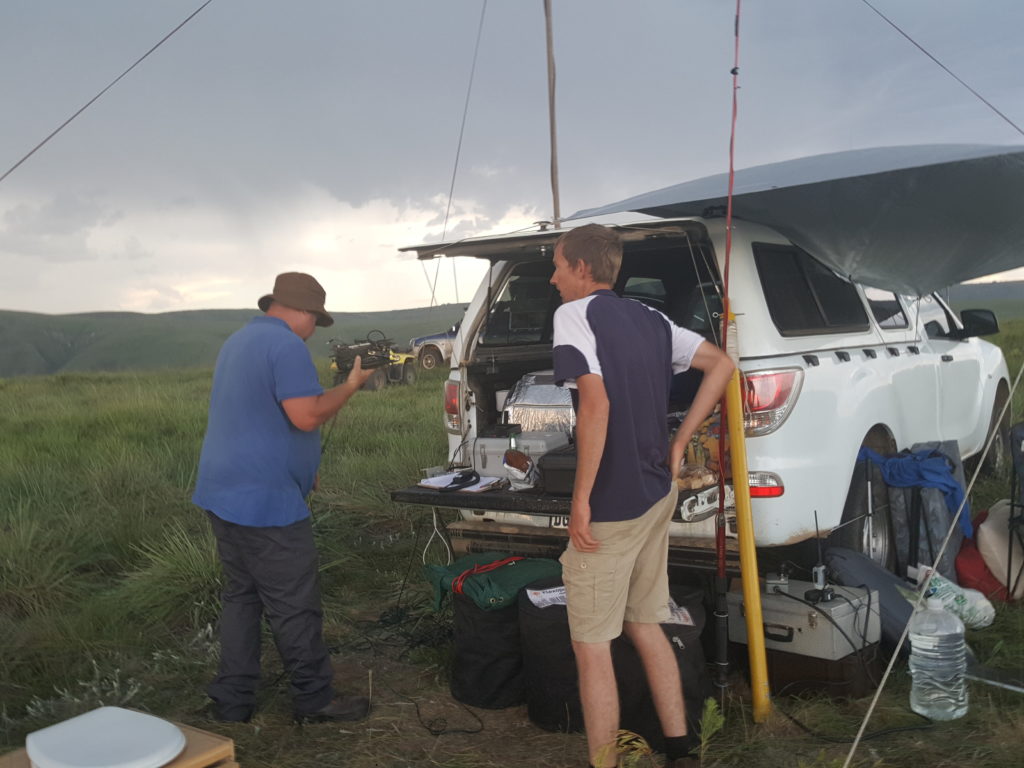
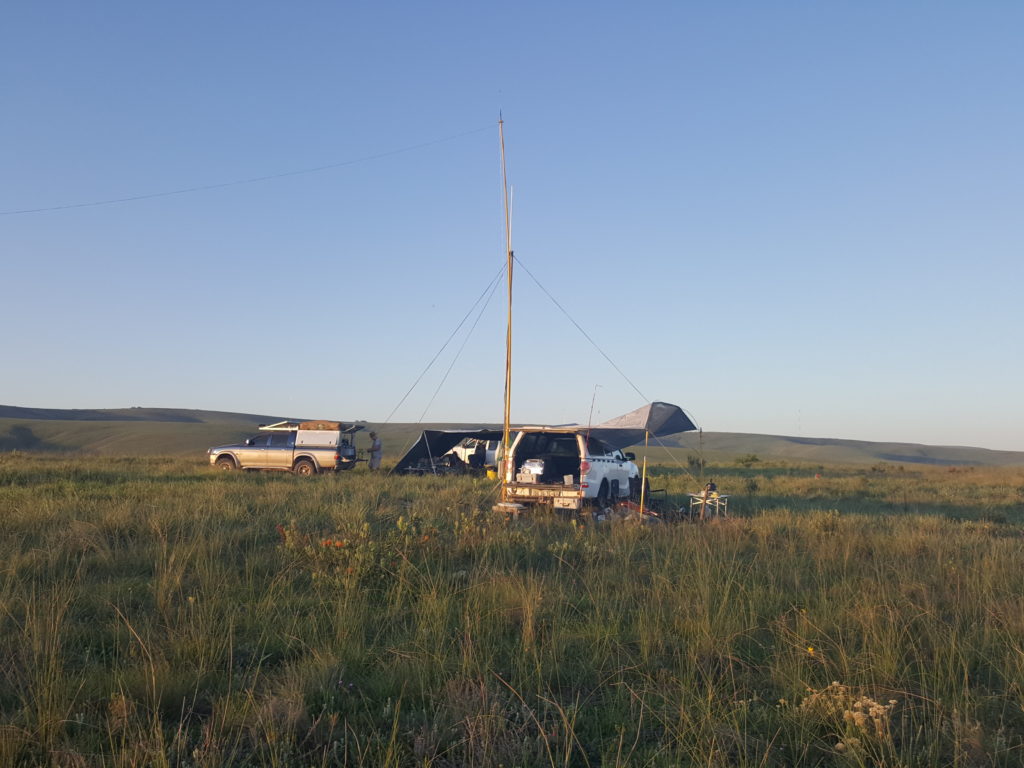
Glen (ZS2GV) and myself have done a few of these together and this time were going to be doing our “usual job” running the cross-band repeaters linking the parks guys with the JOC, the medics, and other hams. This is a vital point in the communications network and the furthest to reach by 4×4. No complaints here.
ZS2GV (left) and ZR2BK (right)
This year we had the pleasure of having Kevern (Kevin ZR2BK) join us. Kevern was interesting and fun and added to the mix very nicely. Glen and I have the understanding that we are always posted together because I don’t know how to setup a radio and he needs adult supervision! Kevern made us think deeply philosophically and we still can’t figure out what he did wrong to have been dumped with us.
Now it might sound like I’m going on a bit when I say “dumped with us” but you must understand you go in on the Friday and camp out in the back of Addo – in a camp not even open to the public – until Sunday morning. All you have for company is each other, the marshals at the race check point and the odd passing runner.
Needles to say, Kevern survived and even thrived! ZR2BK – yay!
A tough night in Africa!
Nothing much to mention about the event itself, except to say it was awesome to work with such a varied bunch of competent people! The event medics, the Western Cape Mountain Rescue, the Park Rangers, the event organizers and the local suspects all operated seamlessly. I was impressed in particularly with the guys from the Western Cape Mountain Rescue who were there in the valley just below our position. We had to relay messages between VOC and their team on several occasions and the radio discipline they have is on a par with anything I have seen as a radio ham! Kudus to you guys! I will always be prepared to work with these guys.
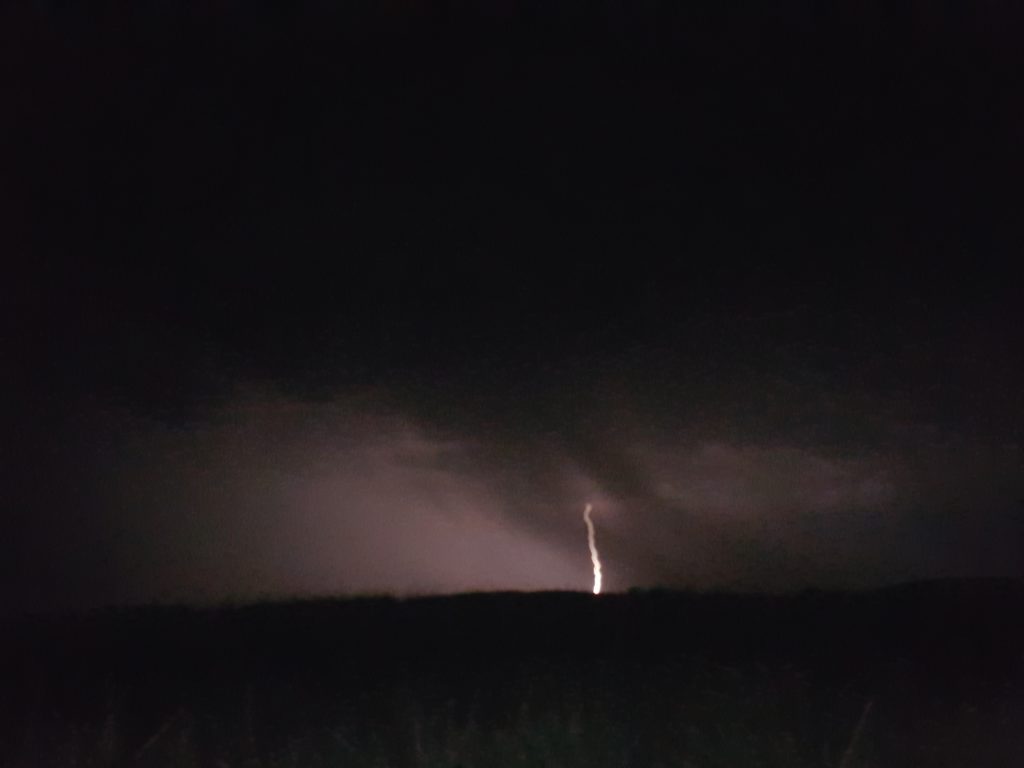
One thing worth a mention is the Saturday evening thunderstorm. Lightning on the ridge behind us and all around. The antenna came down as soon as we could – but we were the last to do so because it we had to link the valley below with the VOC and the medics. Entertaining to watch, but do prefer a bit more space to be comfortable. ZS2GV was with me during the lightning storm on Cockscomb too – just saying!
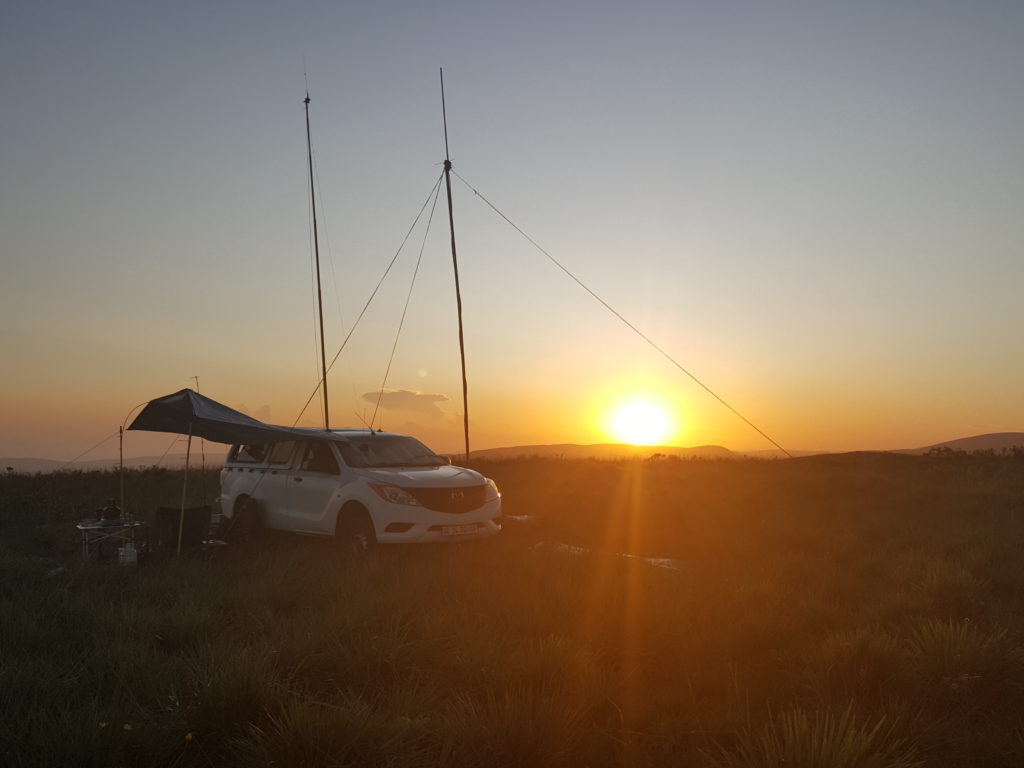
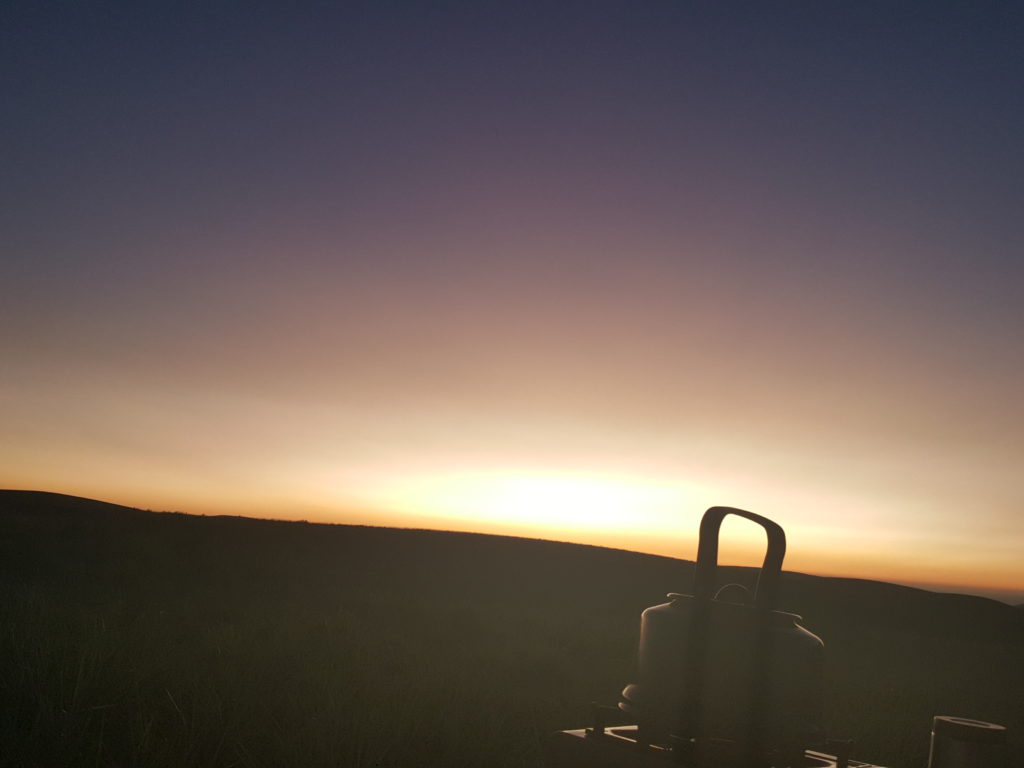
Before I get all soppy and tell you about the sunrises and sunsets, I need to point out that the ridge we were on runs basically east-west. A few years ago I took a series of photos facing east in the morning and west in the afternoon from the same spot. It is an amazing spot to loose a few hours of your stress!
As usual, the pleasure of the outdoors, the sunrises and sunsets, and the company is all part of something truly magical. Thank you!
I also took about a thousand pics without a lightning bolt in them….just for research purposes!
After the mountain bike race, the road race follows – but is very different from a depolyment perspective. I suggested to Tony (ZR2TX) that we make it a “Take a Toppie” outing to help get some of the older members out to play radio without the normal associated risks of having elderly people by themselves or in difficult terrain.
My “Toppie” was Gus – ZS2MC and we had a blast!
A grateful ZS2DH
Beverley (my XYL) and I arranged to take Gus with us and we both enjoyed it immensly! Truth be told, I think Gus enjoed himself too! We called Gus about a week before the event and invited him.
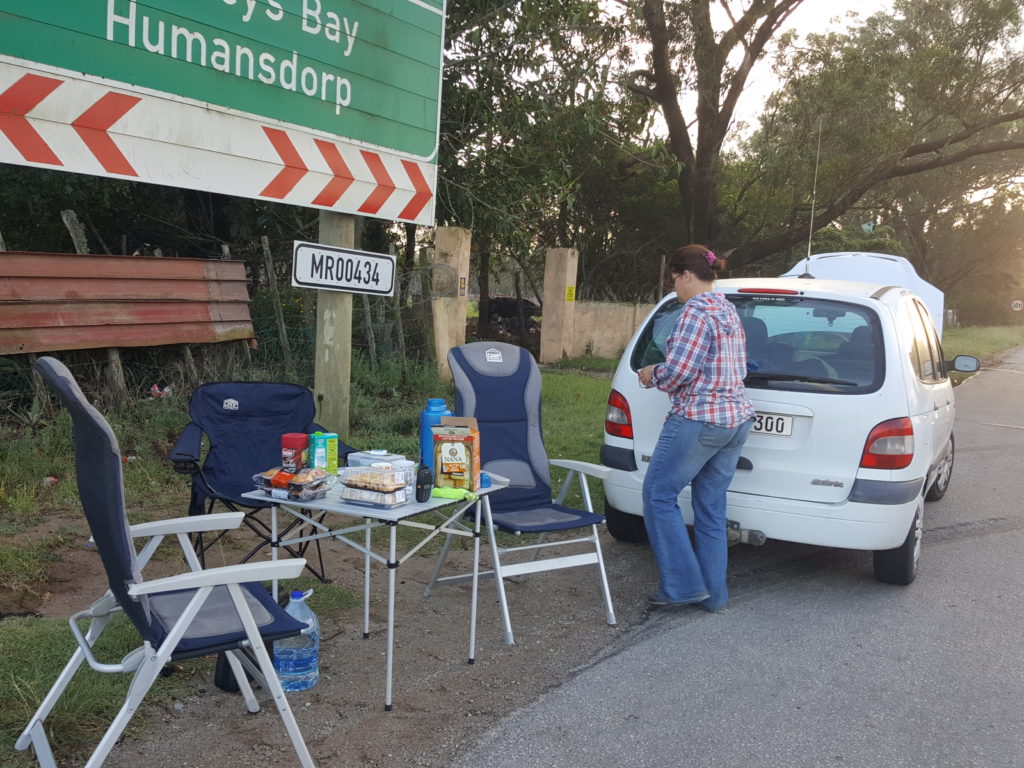
He would be moving QTH shortly, but felt he could spare the time and accepted the invitation. We agreed that we would pick him up *very* early on the morning of the race and take him to our spot – near the St Albans Correctional Fascility. We arrived to find the traffic officer and race marshal ready.
As is customary at these sorts of events – and considering we had Gus with us – coffee and tea were served.
We really do not go without anything when Beverley comes along!
Gus enjoyed calling the race leaders numbers in to control when they rounded our corner. I enjoyed the large number of lady cyclists, while Bev certainly did not mind keeping an eye on the men!
It is not a long event – over by lunch time (well for us at our spot) others say a bit longer.
We took Gus home and returned him – unbroken! We all had a good time and some really good laughs.